
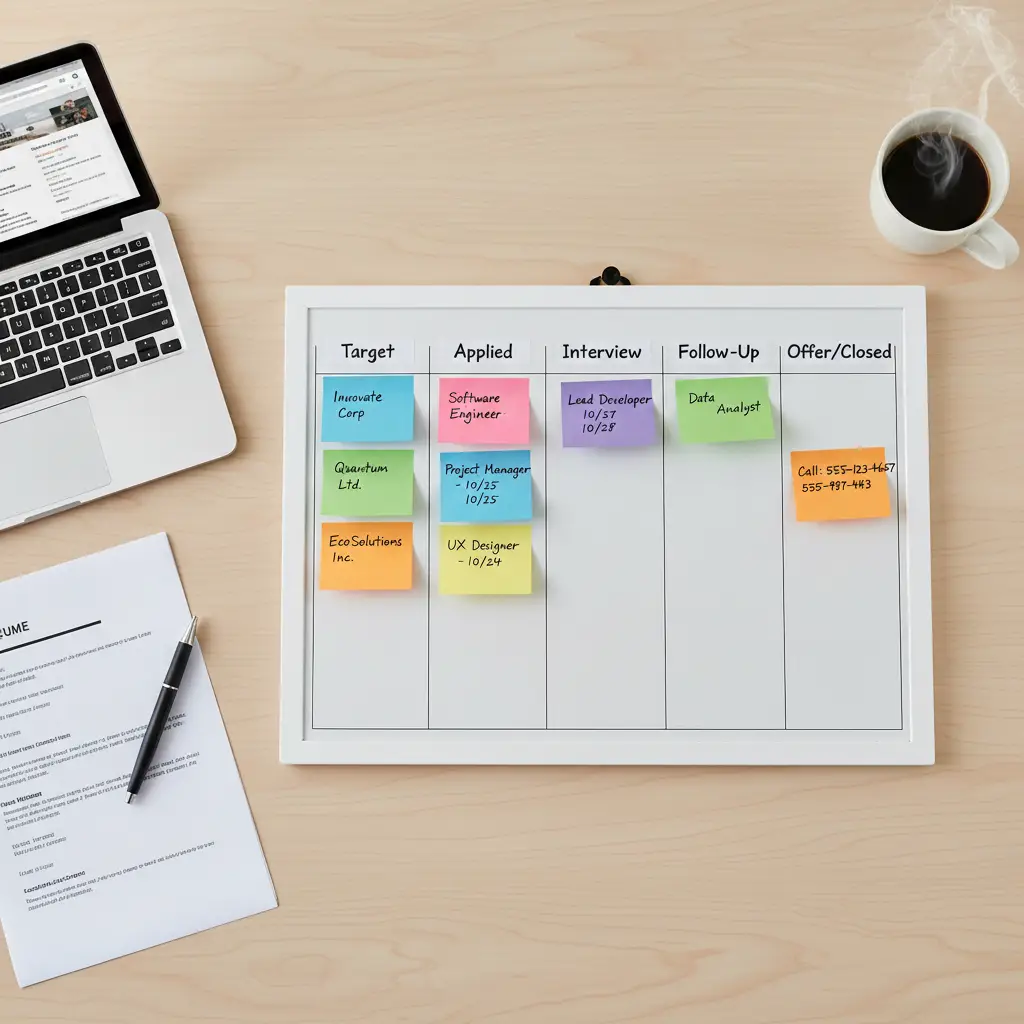
Job hunting can feel chaotic. Spreadsheets grow messy, email threads get buried, and opportunities slip through the cracks. After one too many missed follow-ups, I realized my problem wasn’t my resume or skills—it was how I managed the process.
That’s when I borrowed a simple idea from agile project management: a 5-column Kanban board, customized specifically for job hunting. It brought clarity, momentum, and accountability—and ultimately helped me land an offer.
In this post, I’ll walk you through the exact Kanban setup I used, how each column works, and how you can adapt it to your own job search.
Why a Kanban Board Works for Job Hunting
A job search is a project:
Multiple tasks
Competing priorities
Waiting states
Clear outcomes (offers or rejections)
Kanban excels at visualizing work and reducing mental overload. Instead of juggling everything in your head, you see progress happening, which is incredibly motivating during long job searches.
The 5 Columns That Changed Everything
1. Interested 👀
This column is for possibilities, not commitments.
What goes here:
Roles you’ve bookmarked
Companies you want to work for
Referrals mentioned in passing
Job ads you haven’t reviewed deeply yet
Rule:
Nothing stays here longer than 3–5 days. Either move it forward or delete it.
Psychological win: This removes guilt. You’re allowed to be curious without pressure.
2. Applied 📄
Once you submit an application, it earns a place here.
Include on each card:
Company name
Role title
Application date
Link to job description
Resume version used
Optional extras:
Salary range
Recruiter name
Referral source
This column prevents the classic question:
“Wait… did I already apply to this?”
3. Interviewing 🎤
This is where momentum lives.
Examples of cards here:
HR screening scheduled
Technical interview completed
Assignment pending
Final round booked
Pro tip:
Break interviews into sub-steps (e.g., “Tech Interview – Round 1”). This shows progress even when things feel slow.
4. Waiting ⏳
This column is the secret weapon.
Most job hunters forget follow-ups—or overdo them. This column fixes that.
What belongs here:
“Interview done – awaiting feedback”
“Offer discussed – pending approval”
“Recruiter said ‘next week’”
Add a follow-up date on each card.
If the date arrives and there’s no response, you act—confidently and professionally.
5. Offer / Closed ✅
Every job ends here—offer or no offer.
Two sub-states:
🎉 Offer received
❌ Rejected / Withdrawn
Why keep rejections?
You see how far you got
You notice patterns
You build emotional closure
This column reminds you that progress isn’t only success—it’s completion.
How I Used This Board Weekly
Every morning (5 minutes):
Move any overdue cards
Check Waiting follow-ups
Add new Interested roles
Once a week (20 minutes):
Clean stale cards
Review what converted (Interested → Interview)
Adjust strategy if needed
This replaced anxiety with routine.
The Unexpected Benefit: Confidence
When recruiters asked:
“Where else are you interviewing?”
I didn’t hesitate. I knew.
When offers arrived, I could compare timelines clearly.
And when rejection emails came?
They didn’t derail me—because I could see forward motion elsewhere.
Final Thoughts
Job hunting isn’t about working harder—it’s about working visibly.
A simple 5-column Kanban:
Reduces overwhelm
Prevents missed follow-ups
Builds momentum
Keeps you emotionally grounded
If you’re feeling stuck, don’t rewrite your resume just yet.
Rewrite your process.