
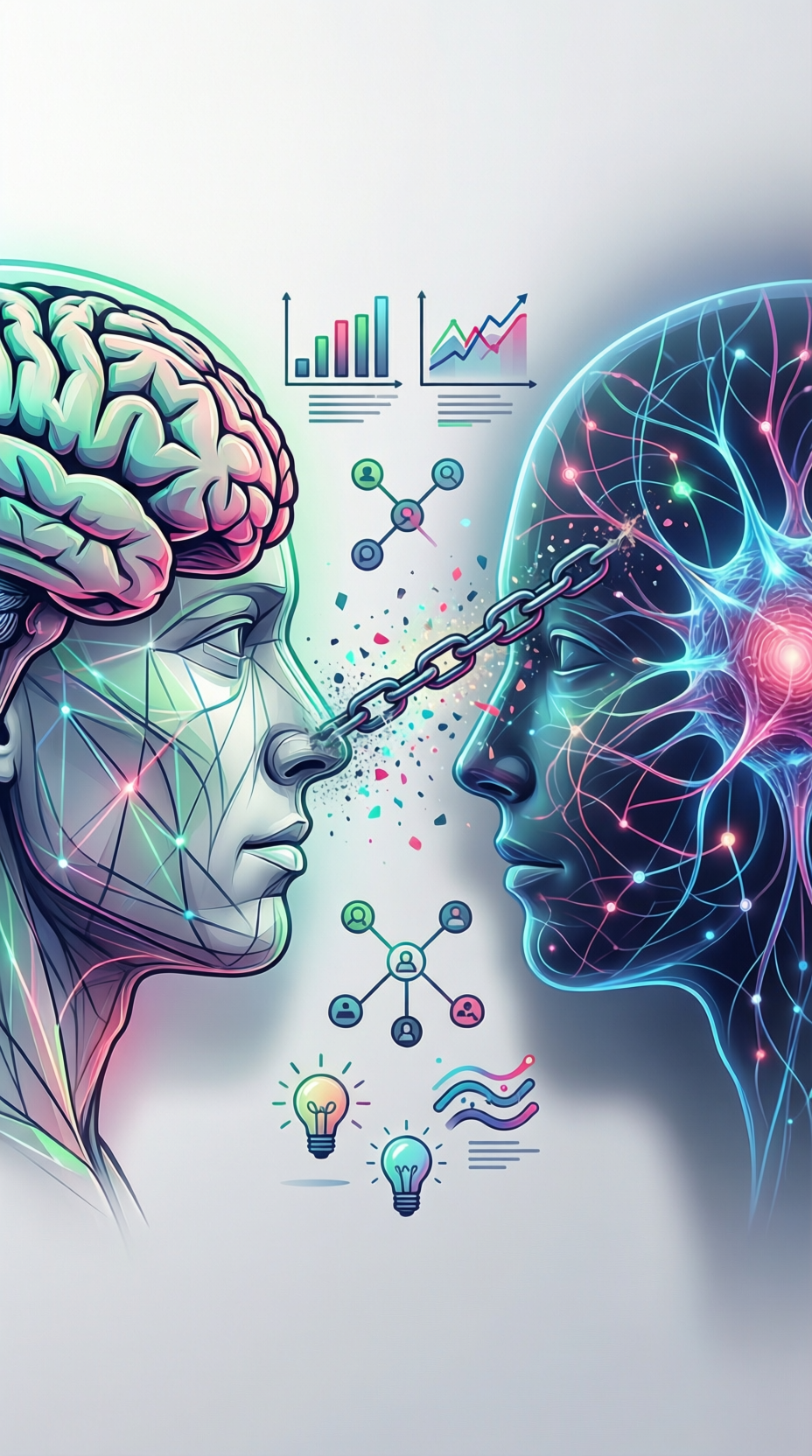
In a world overflowing with information, making good decisions is harder than ever. Even experienced leaders, analysts, and entrepreneurs fall victim to hidden mental shortcuts known as decision-making biases. These biases distort judgment, slow progress, and lead to costly mistakes.
This is where AI-powered decision tools—like scenario planners, forecasting models, and structured reasoning assistants—shine. By analyzing data objectively and exploring alternatives at scale, AI helps reduce the influence of human bias and supports more rational, evidence-based decisions.
Below are five common decision biases AI helps eliminate, and how smarter tools can improve the quality of your choices.
1. Confirmation Bias
What it is:
Confirmation bias occurs when we favor information that supports our existing beliefs while ignoring contradictory evidence.
Why it’s dangerous:
Reinforces wrong assumptions
Leads to overconfidence
Blocks innovation and learning
How AI helps:
AI-driven decision systems evaluate all relevant inputs, not just the ones you prefer. Scenario planners and data models deliberately surface counterfactuals, edge cases, and alternative outcomes, forcing decision-makers to confront uncomfortable but critical information.
Example:
An AI scenario planner can show what happens if your core assumption is wrong, something humans rarely test on their own.
Related keywords: confirmation bias in decision making, AI decision support systems
2. Anchoring Bias
What it is:
Anchoring bias happens when we rely too heavily on the first piece of information we see (the “anchor”), even if it’s irrelevant or outdated.
Why it’s dangerous:
Skews pricing, budgeting, and forecasting
Makes teams resistant to updated data
How AI helps:
AI recalculates outcomes dynamically based on current and complete data, not first impressions. By running multiple models and ranges, AI reduces fixation on a single number or early estimate.
Example:
Instead of planning around an initial cost estimate, AI tools generate best-case, worst-case, and most-likely scenarios.
Related keywords: anchoring bias examples, AI forecasting tools
3. Availability Bias
What it is:
Availability bias occurs when we judge likelihood based on what’s most recent, vivid, or emotionally memorable—rather than what’s statistically probable.
Why it’s dangerous:
Overreacting to recent events
Poor risk assessment
Emotion-driven decisions
How AI helps:
AI evaluates historical data, long-term trends, and probability distributions, not just what’s top-of-mind. This leads to more balanced and realistic decisions.
Example:
A recent failure may feel catastrophic, but AI trend analysis might show it’s a rare outlier rather than a pattern.
Related keywords: availability heuristic, AI risk analysis
4. Overconfidence Bias
What it is:
Overconfidence bias is the tendency to overestimate our knowledge, accuracy, or ability to predict outcomes.
Why it’s dangerous:
Underestimating risks
Ignoring contingency planning
Strategic blind spots
How AI helps:
AI introduces probability-based thinking, confidence intervals, and uncertainty modeling. Instead of “I’m sure,” decisions are framed as likelihoods with known risks.
Example:
AI scenario tools highlight low-probability but high-impact risks that humans often dismiss.
Related keywords: overconfidence bias psychology, AI scenario analysis
5. Status Quo Bias
What it is:
Status quo bias is the preference for keeping things the same, even when better alternatives exist.
Why it’s dangerous:
Missed opportunities
Slow adaptation to change
Competitive disadvantage
How AI helps:
AI makes the cost of inaction visible. By comparing current-state outcomes against alternative futures, AI exposes when “doing nothing” is actually the riskiest option.
Example:
An AI-driven comparison may reveal that maintaining the current strategy leads to declining outcomes over time.
Related keywords: status quo bias examples, AI decision intelligence
Why AI-Augmented Decision Making Matters
AI doesn’t replace human judgment—it augments it. The real advantage comes from combining:
Human intuition and context
AI-driven objectivity and scale
Structured frameworks for clearer thinking
Platforms like SmartDecisionsHub leverage AI to:
Explore multiple scenarios instantly
Reduce cognitive bias
Improve strategic clarity and confidence
The result? Better decisions, faster learning, and fewer regrets.
Final Thoughts
Decision biases are unavoidable—but their impact doesn’t have to be. With the right AI decision-making tools, you can challenge assumptions, quantify uncertainty, and make smarter, more resilient choices.
If your goal is clearer thinking and better outcomes, AI is no longer optional—it’s a strategic advantage.
1 thought on “5 Decision Biases AI Helps Eliminate (and Why That Matters for Better Decisions)”
Comments are closed.