
Introduction to SWOT Analysis
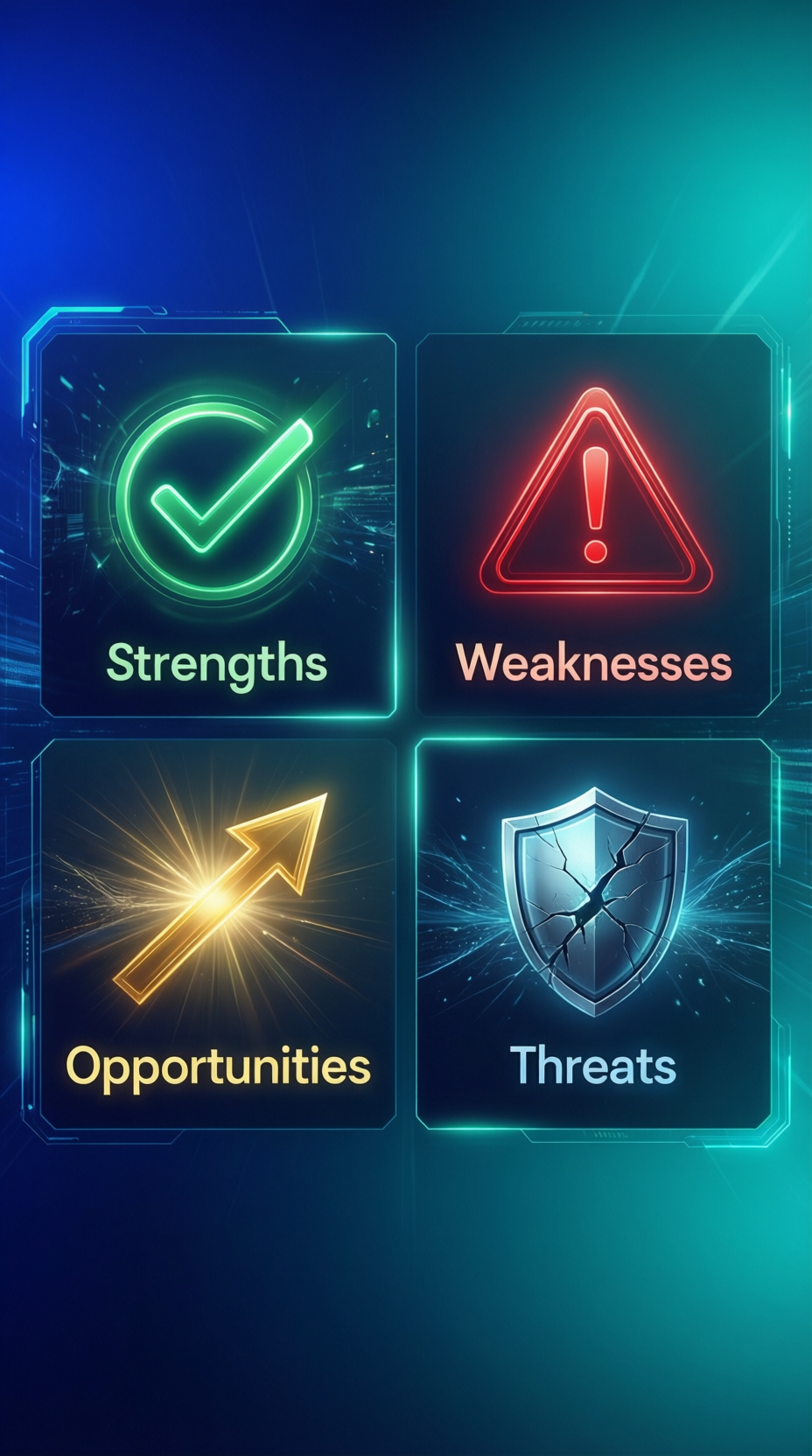
SWOT analysis is a straightforward strategic planning framework that evaluates Strengths, Weaknesses, Opportunities, and Threats to audit your business effectively. Ideal for beginners, it helps small business owners and entrepreneurs like those using SmartDecisionHub.com gain clarity on their position in 2026’s fast-changing market. This method originated in the 1960s at Stanford Research Institute and remains a core tool for decision-making.
Why SWOT Matters in 2026
In 2026, with AI disruptions, economic shifts, and rising competition, regular business audits via SWOT keep you agile. It uncovers internal factors (strengths and weaknesses) and external ones (opportunities and threats), guiding smarter decisions without complex software. Businesses using SWOT report better resource allocation and growth strategies.
Step-by-Step Guide to Conducting SWOT
Follow these beginner-friendly steps to perform a SWOT analysis for your business audit.
- Define Your Objective: Start with a clear goal, like launching a product or entering a new market in 2026.
- Gather Data: Collect internal info (team skills, finances) and external intel (market trends, competitors).
- List Strengths: Note what you excel at, e.g., unique tech or loyal customers.
- Identify Weaknesses: Be honest about gaps, like limited funding or outdated tools.
- Spot Opportunities: Look for 2026 trends like AI integration or sustainability demands.
- Pinpoint Threats: Consider risks such as new regulations or supply chain issues.
- Analyze and Strategize: Match strengths to opportunities; address weaknesses against threats.
SWOT Matrix Template
Use this simple 2×2 table to visualize your business audit. Copy it into SmartDecisionHub.com tools for customization.
Real-World Examples
A coffee shop in Kuching might list strengths like local sourcing, weaknesses as slow online orders, opportunities in eco-tourism trends for 2026, and threats from chain cafes. Tech startups on SmartDecisionHub.com use SWOT to pivot toward Next.js apps amid web3 shifts.
Actionable Strategies from SWOT
- SO Strategy: Leverage strengths for opportunities, e.g., use dev skills for AI-enhanced web apps.
- WO Strategy: Fix weaknesses to seize opportunities, like upskilling in SEO without plugins.
- ST Strategy: Use strengths to counter threats, such as community forums against competitors.
- WT Strategy: Minimize weaknesses and threats, e.g., diversify suppliers.
Common Mistakes to Avoid
Beginners often overlook external threats like cybersecurity in 2026 or bias toward strengths only. Always involve your team for balanced input and revisit quarterly. Pair with SmartDecisionHub.com frameworks for ongoing audits.