
Introduction
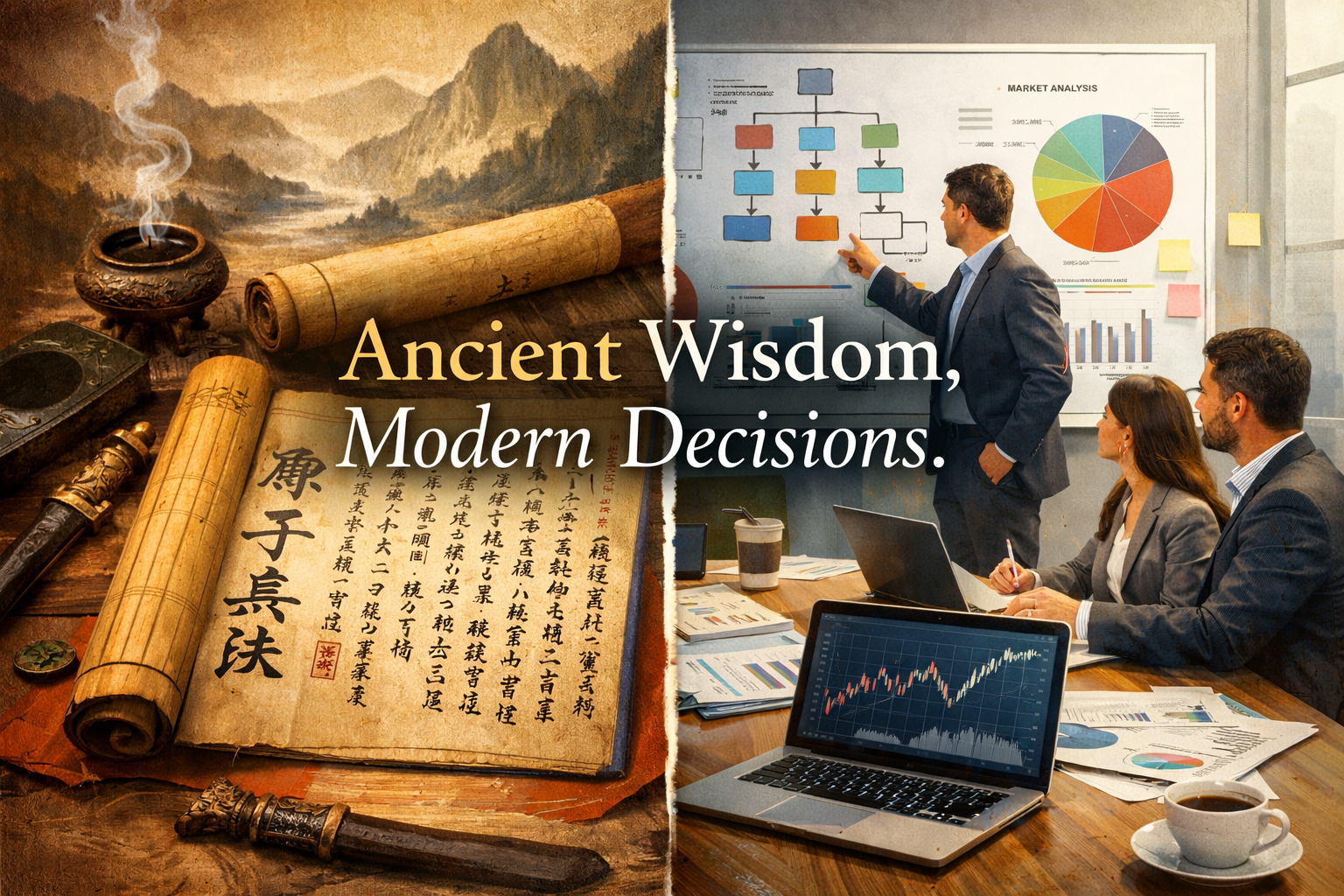
In an era of information overload and rapid change, leaders face increasingly complex decisions daily. What if the key to clearer decision-making wasn’t found in the latest business trend, but in a 2,500-year-old Chinese military treatise?
Sun Tzu’s The Art of War has transcended its military origins to become one of the most influential works on strategy ever written. Today, Fortune 500 CEOs, startup founders, and strategic leaders apply its principles to gain competitive advantage. But how exactly can this ancient wisdom transform your decision-making framework?
This guide reveals five powerful principles from The Art of War that will sharpen your strategic thinking and help you make better decisions—in business and beyond.
Why The Art of War Remains Relevant for Decision Making
Before diving into specific strategies, it’s essential to understand why a text about warfare applies to modern strategic decision-making.
Sun Tzu’s genius wasn’t in tactics alone—it was in his systematic approach to understanding conflict, competition, and choice. His framework emphasizes:
- Thorough preparation before action
- Deep understanding of all variables
- Adaptability to changing circumstances
- Strategic positioning over brute force
- Winning without fighting when possible
These principles form the foundation of effective decision-making strategy in any competitive environment.
Principle 1: Know Yourself and Know Your Situation
“If you know the enemy and know yourself, you need not fear the result of a hundred battles.” — Sun Tzu
The Decision-Making Application
Before making any significant decision, conduct an honest assessment of:
Internal Factors (Know Yourself):
- Your core competencies and strengths
- Available resources (time, budget, personnel)
- Organizational culture and values
- Risk tolerance and capacity
- Past decision-making patterns
External Factors (Know Your Situation):
- Market conditions and trends
- Competitive landscape
- Stakeholder expectations
- Regulatory environment
- Technological disruptions
Practical Framework: The Strategic Audit
Create a decision-making checklist:
- What are our unique advantages?
- Where are we vulnerable?
- What resources do we control?
- What external forces could impact this decision?
- What assumptions are we making?
SEO Benefit: This self-assessment creates clarity and prevents decisions based on wishful thinking rather than reality—a common strategic planning failure.
Principle 2: Win Before the Battle Begins
“The supreme art of war is to subdue the enemy without fighting.” — Sun Tzu
The Decision-Making Application
The best decisions often prevent problems rather than solve them. This principle emphasizes strategic positioning and preparation over reactive crisis management.
How to Apply This:
1. Scenario Planning Map out multiple future scenarios before committing to a decision. Ask:
- What could go wrong?
- What opportunities might emerge?
- How will competitors likely respond?
2. Build Strategic Advantages Instead of competing head-to-head, position yourself where competition becomes irrelevant:
- Identify underserved market segments
- Develop unique capabilities
- Create switching costs for customers
- Build strong relationships and networks
3. Preventive Decision-Making Address issues before they become crises:
- Invest in quality control to prevent defects
- Build emergency funds before financial stress
- Develop talent pipelines before hiring needs arise
Real-World Example: Netflix didn’t wait for streaming to disrupt DVD rentals—they cannibalized their own business model first, making the competition irrelevant.
Principle 3: Adaptability is Everything
“Water shapes its course according to the nature of the ground over which it flows. The soldier works out his victory in relation to the foe whom he is facing.” — Sun Tzu
The Decision-Making Application
Rigid adherence to plans in the face of changing circumstances is a recipe for failure. Effective decision-making frameworks build in flexibility and feedback loops.
Create Adaptive Decision-Making Systems:
1. Use Iterative Approaches
- Break large decisions into smaller, testable steps
- Implement pilot programs before full rollout
- Set review checkpoints to assess progress
2. Monitor Key Indicators Establish early warning signals that tell you when to pivot:
- Customer satisfaction metrics
- Market share trends
- Employee engagement scores
- Cash flow patterns
3. Embrace the OODA Loop (Borrowed from military strategist John Boyd, inspired by Sun Tzu)
- Observe the situation
- Orient yourself to new information
- Decide on a course of action
- Act quickly
- Repeat faster than competitors
Case Study: During the pandemic, restaurants that quickly adapted to delivery and takeout models survived; those rigidly attached to dine-only models struggled.
Principle 4: The Importance of Intelligence and Information
“What enables the wise sovereign and the good general to strike and conquer, and achieve things beyond the reach of ordinary men, is foreknowledge.” — Sun Tzu
The Decision-Making Application
In the information age, the challenge isn’t accessing data—it’s filtering signal from noise and turning information into actionable intelligence.
Build Your Decision Intelligence System:
1. Identify Critical Information Needs Not all data matters. Determine what information directly impacts your decision:
- Customer behavior patterns
- Competitor moves
- Industry trends
- Internal performance metrics
2. Create Feedback Loops
- Regular customer surveys and interviews
- Employee input mechanisms
- Market research updates
- Competitive analysis reports
3. Avoid Analysis Paralysis Sun Tzu valued speed and decisiveness. Set:
- Clear decision deadlines
- Minimum viable information thresholds
- Comfort with calculated uncertainty
The 70% Rule: When you have 70% of the information you’d like, make the decision. Waiting for 100% guarantees you’re too late.
Principle 5: Unity of Purpose and Clear Communication
“The general who wins a battle makes many calculations in his temple ere the battle is fought.” — Sun Tzu
The Decision-Making Application
Even the best strategic decision fails without proper execution. Unity of purpose ensures everyone moves in the same direction.
Ensure Decision Alignment:
1. Communicate the “Why” People support what they help create. Explain:
- The reasoning behind the decision
- How it aligns with broader goals
- What success looks like
- Individual roles in execution
2. Build Consensus Where Possible While not every decision requires unanimous agreement, seek input from:
- Those who will implement the decision
- Those affected by it
- Those with relevant expertise
3. Establish Accountability Clear decisions include:
- Who is responsible for what
- Timelines and milestones
- Success metrics
- Consequences for non-performance
Implementing The Art of War Decision-Making Framework
Ready to apply these principles? Here’s your action plan:
Step 1: Assess Your Current Decision-Making Process
- Audit recent decisions: What worked? What failed?
- Identify patterns in your approach
- Recognize cognitive biases that cloud judgment
Step 2: Choose One Principle to Master First
Don’t overhaul everything at once. Start with:
- Better situational analysis (Principle 1), or
- Improved information gathering (Principle 4), or
- Enhanced adaptability (Principle 3)
Step 3: Create Decision-Making Templates
Develop standardized frameworks for common decisions:
- Hiring decisions
- Investment choices
- Strategic partnerships
- Product launches
Step 4: Build a Decision Review Practice
After major decisions:
- Document expected outcomes
- Review actual results
- Extract lessons learned
- Adjust your framework
Step 5: Cultivate Strategic Thinking Daily
- Read broadly across industries
- Study both successes and failures
- Practice scenario thinking
- Question assumptions regularly
Common Mistakes When Applying The Art of War to Decisions
Avoid these pitfalls:
❌ Being overly aggressive – Sun Tzu valued winning without conflict ❌ Ignoring ethics – Ancient strategy must align with modern values ❌ Overconfidence – “Know yourself” includes knowing your limitations ❌ Rigidity – The principles guide, but don’t replace, critical thinking ❌ Isolation – Even generals need advisors and diverse perspectives
The Competitive Advantage of Strategic Decision-Making
Organizations that master strategic decision-making frameworks gain significant advantages:
✅ Faster response times to market changes ✅ Better resource allocation and ROI ✅ Reduced costly mistakes and course corrections ✅ Increased team alignment and execution speed ✅ Sustainable competitive advantage over reactive competitors
Conclusion: Ancient Wisdom, Modern Application
Sun Tzu’s Art of War endures not because warfare hasn’t changed, but because human nature, competition, and the fundamentals of strategic thinking remain constant.
By applying these five principles—knowing yourself and your situation, winning before the battle, adapting to change, gathering intelligence, and ensuring unity of purpose—you’ll develop a decision-making framework that stands the test of time.
The question isn’t whether you’ll face difficult decisions. The question is: Will you face them with the wisdom of 2,500 years of strategic thought behind you?
Start today. Choose one principle. Apply it to your next significant decision. Observe the results. Refine your approach.
That’s not just good strategy. That’s the art of war applied to the art of decision-making.