
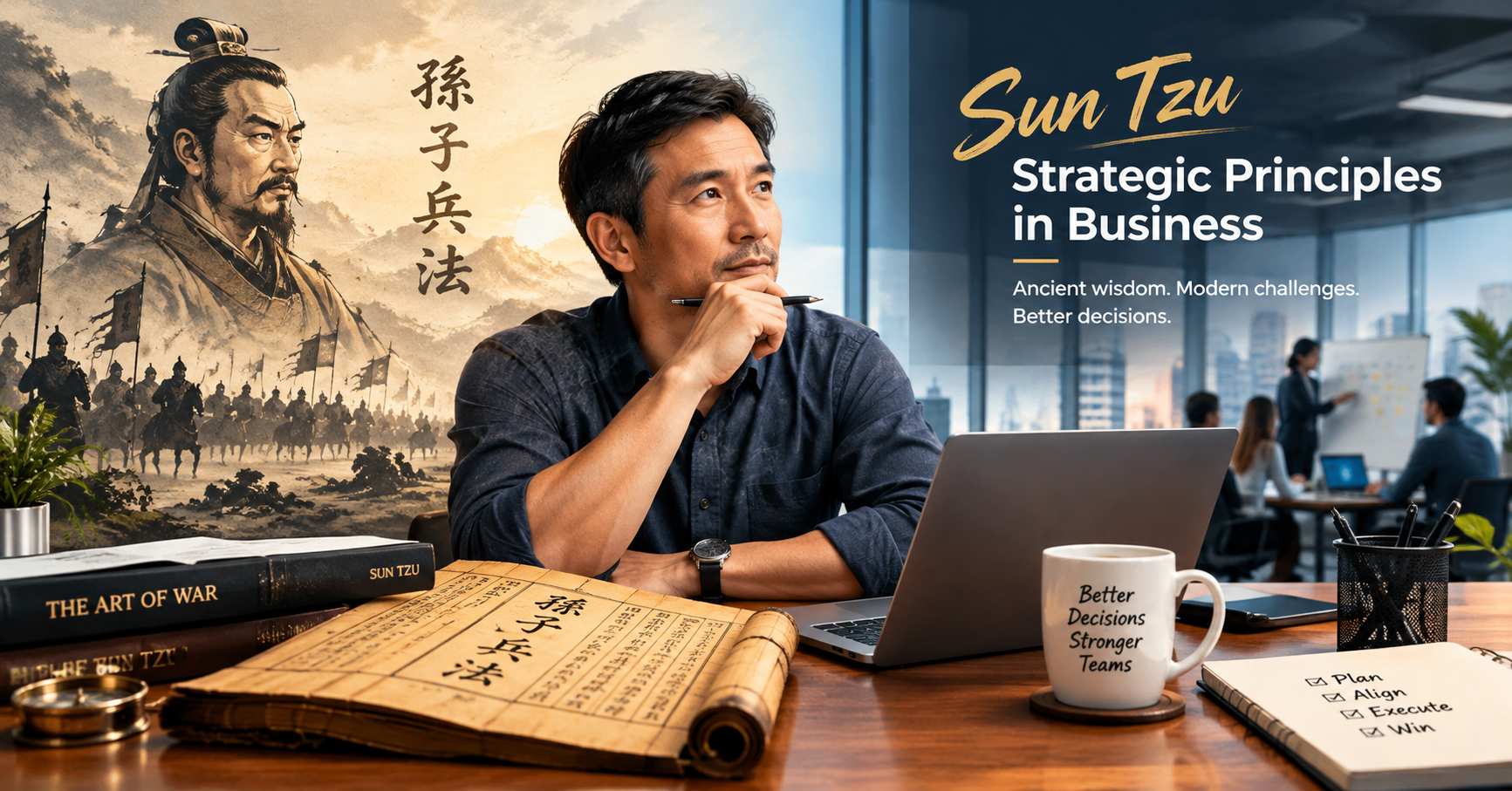
You’re stuck in the middle. Literally.
As a middle manager, you’re translating executive vision into frontline action while juggling team dynamics, tight deadlines, and limited resources. Sound familiar?
Here’s the thing: 2,500 years ago, a Chinese general named Sun Tzu faced similar challenges. His solution? The Art of War—a timeless playbook on strategy that’s surprisingly relevant for today’s middle managers.
You don’t need to command armies to benefit from Sun Tzu’s wisdom. Whether you’re managing a team of five or fifty, these 10 strategic lessons will help you navigate office politics, make better decisions, and lead with confidence.
Let’s dive in.
 1. “Know Yourself and Know Your Enemy”
Sun Tzu Said: “If you know the enemy and know yourself, you need not fear the result of a hundred battles.”
What This Means for You: Self-awareness isn’t just a buzzword—it’s your strategic superpower. Understanding your team’s strengths, weaknesses, and motivations gives you a massive advantage. But don’t stop there. Know your “enemy”: competing departments, market pressures, or organizational constraints.
Action Step: Conduct a quarterly SWOT analysis (Strengths, Weaknesses, Opportunities, Threats) for your team. When you understand the full landscape, you can implement better decision-making frameworks that account for real-world constraints.

2. “Victorious Warriors Win First, Then Go to War”
Sun Tzu Said: “Victorious warriors win first and then go to war, while defeated warriors go to war first and then seek to win.”
What This Means for You: Preparation beats improvisation every time. Too many managers dive into projects without a clear plan, hoping to figure it out along the way. Strategic managers do the homework first: they gather data, align stakeholders, and anticipate obstacles.
Action Step: Before launching any initiative, create a pre-mortem. Ask: “If this project failed, why would it happen?” This strategic planning approach helps you identify risks before they become problems.
3. “The Supreme Art of War Is to Subdue the Enemy Without Fighting”
Sun Tzu Said: “The supreme excellence is breaking the enemy’s resistance without fighting.”
What This Means for You: Office conflicts drain energy and productivity. The best managers don’t “win” arguments—they prevent them. Build alliances, communicate clearly, and find win-win solutions before disagreements escalate.
Action Step: When facing resistance, ask questions instead of making demands. “Help me understand your concerns” opens dialogue; “This is how we’re doing it” shuts it down.
4. “Be Extremely Subtle, Even to the Point of Formlessness”
Sun Tzu Said: “Be extremely subtle, even to the point of formlessness. Be extremely mysterious, even to the point of soundlessness. Thereby you can be the director of the opponent’s fate.”
What This Means for You: Flexibility is your friend. Rigid managers break under pressure; adaptable ones thrive. Don’t lock yourself into one approach. Stay open to pivoting when circumstances change.
Action Step: Develop multiple scenarios for your key projects. What if budget gets cut? What if a key team member leaves? Having contingency plans keeps you agile.

5. “Opportunities Multiply as They Are Seized”
Sun Tzu Said: “Opportunities multiply as they are seized.”
What This Means for You: Momentum is real. Small wins create confidence, which attracts resources, which enables bigger wins. Don’t wait for the perfect moment—start where you are with what you have.
Action Step: Identify one “quick win” you can achieve this week. Celebrate it publicly. Watch how it opens doors you didn’t even know existed.

6. “The General Who Advances Without Coveting Fame and Retreats Without Fearing Disgrace”
Sun Tzu Said: “The general who advances without coveting fame and retreats without fearing disgrace, whose only thought is to protect his country and do good service for his sovereign, is the jewel of the kingdom.”
What This Means for You: Ego kills careers. The best middle managers put team success above personal glory. They’re willing to pivot or kill a failing project even if it means admitting they were wrong.
Action Step: Practice saying “I was wrong” or “We need to change direction” without defensiveness. Your team will respect you more, not less.

7. “Let Your Plans Be Dark and Impenetrable as Night”
Sun Tzu Said: “Let your plans be dark and impenetrable as night, and when you move, fall like a thunderbolt.”
What This Means for You: Not every idea needs a committee review. Sometimes you need to work quietly, build consensus behind the scenes, and then present a fully-formed plan that’s hard to reject.
Action Step: Before announcing major initiatives, do your homework privately. Gather data, test assumptions, and line up supporters. Then launch with confidence.

8. “In the Midst of Chaos, There Is Also Opportunity”
Sun Tzu Said: “In the midst of chaos, there is also opportunity.”
What This Means for You: Organizational change, market shifts, and unexpected crises aren’t just threats—they’re chances to stand out. While others panic, strategic managers position themselves as solutions.
Action Step: When chaos hits, be the calm voice asking: “What can we learn from this? How do we turn this to our advantage?” This problem-solving mindset separates leaders from followers.

9. “Treat Your Men as You Would Your Own Beloved Sons”
Sun Tzu Said: “Regard your soldiers as your children, and they will follow you into the deepest valleys; look on them as your own beloved sons, and they will stand by you even unto death.”
What This Means for You: Your team isn’t a resource—they’re people. Invest in their growth, advocate for their needs, and show genuine care. Loyalty flows both ways.
Action Step: Schedule regular one-on-ones focused on their goals, not just project updates. Ask: “What skills do you want to develop? How can I help you grow?”

10. “The Art of War Is of Vital Importance to the State”
Sun Tzu Said: “The art of war is of vital importance to the state. It is a matter of life and death, a road either to safety or to ruin.”
What This Means for You: Strategy isn’t optional—it’s essential. Every decision you make either moves your team toward success or drags you toward failure. Treat your role with the seriousness it deserves.
Action Step: Block 30 minutes weekly for strategic thinking. No emails, no meetings—just you, reflecting on: “Are we doing the right things, or just doing things right?”

Putting It All Together
Sun Tzu didn’t write The Art of War for middle managers. But his principles transcend time and context because they’re rooted in human nature, organizational dynamics, and the universal challenge of achieving goals with limited resources.
You don’t need to memorize every quote or apply all 10 lessons at once. Start with one. Master it. Then add another.
Remember: Great strategy isn’t about complexity. It’s about clarity, preparation, and execution.
Ready to Level Up Your Strategic Thinking?
These Sun Tzu lessons are just the beginning. To truly think like a strategist, you need practical decision-making frameworks you can apply daily.